
Lycoming County Court Records After Arrest
The arrest-to-court path in Lycoming County usually begins with a local police arrest, state police arrest, sheriff warrant service, probation or parole action, or court commitment. If custody is required, the person may be booked into Lycoming County Prison. Formal court records after a jail arrest then develop through the Pennsylvania court system. A jail or warrant entry may show the reason for custody, but the prosecutor, police complaint, magisterial district judge, information, amendment, plea, or court order can change what the docket ultimately shows.
That distinction matters. Lycoming County jail inmate records are the place to check current custody and jail routing. Lycoming County jail mugshots addresses booking-photo availability. Court records after a jail arrest answer a different question: what case was filed, which charges moved forward, what bail or release condition was ordered, whether a warrant issued, and how the court disposed of the case.
Find Court Records After Arrest
The main public portal is Pennsylvania UJS Case Search. It supports several search paths, including participant name, docket number, complaint number, OTN, incident number, citation number, SID, and date filed. The county dropdown includes Lycoming, and the judicial district dropdown includes Lycoming - 29. UJS is the best first stop for criminal docket sheets after a Lycoming County arrest because it shows the filed court case rather than just the jail custody status.
The Pennsylvania UJS search screen is the statewide entry point for Lycoming County criminal docket searches.
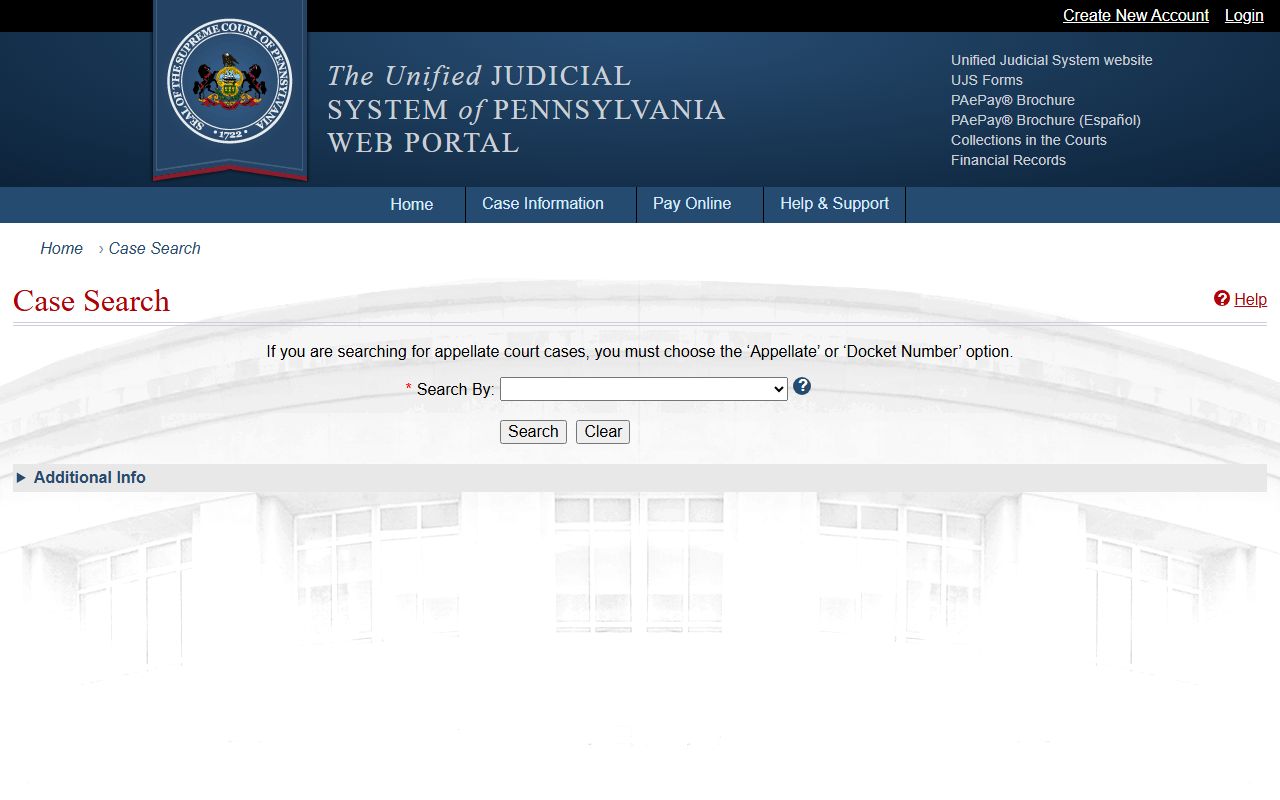
Use the docket sheet to compare the first arrest or complaint charge with later amendments, pleas, dismissals, and dispositions.
- Open UJS Case Search and choose a search type such as participant name, docket number, OTN, or complaint number.
- Limit by Lycoming County or Lycoming - 29 when the person name is common.
- Open the docket sheet and review charges, bail, events, warrants, and disposition lines.
- Compare lower-court entries with Common Pleas entries if the case was held for court.
- Call the Clerk of Courts for criminal docket questions when online entries are unclear or delayed.
Lycoming Court Records Search Fields
Search fields matter because names alone can produce false matches. An OTN, complaint number, incident number, docket number, or date filed can tie court records after an arrest to the correct booking event. The UJS docket sheets page also warns that recent entries may not be immediately reflected and that docket sheets are not a substitute for a Pennsylvania State Police criminal-history background check.
| Field Label | Type | Required | Options or Format Notes |
|---|---|---|---|
| Search By | Radio or dropdown | Yes | Includes appellate, attorney, calendar event, citation, complaint, date filed, docket, incident, organization, OTN, parcel, participant name, and SID. |
| Docket Number | Text | Optional by route | Use exact docket when known. |
| Date Filed Start/End | Date | Optional | Narrows a common-name search. |
| County | Dropdown | Optional | Select Lycoming for local cases. |
| Judicial District | Dropdown | Optional | Select Lycoming - 29 when useful. |
| MDJS Court Office | Dropdown | Optional | Filters lower-court records. |
Lycoming County Clerk Court Records
The Lycoming County Prothonotary and Clerk of Courts page says the Clerk of Courts Office is the chief records keeper for the Court of Common Pleas criminal side. It lists the criminal office phone as (570) 327-2272 and points users to Public Web Docket Sheets for Pennsylvania Criminal Courts of Common Pleas docket records. Civil matters are separate and can be searched through the CountySuite civil portal by case number, participant name, participant address, or reference numbers.
The Clerk of Courts page gives local office context for criminal court records after a Lycoming County arrest.
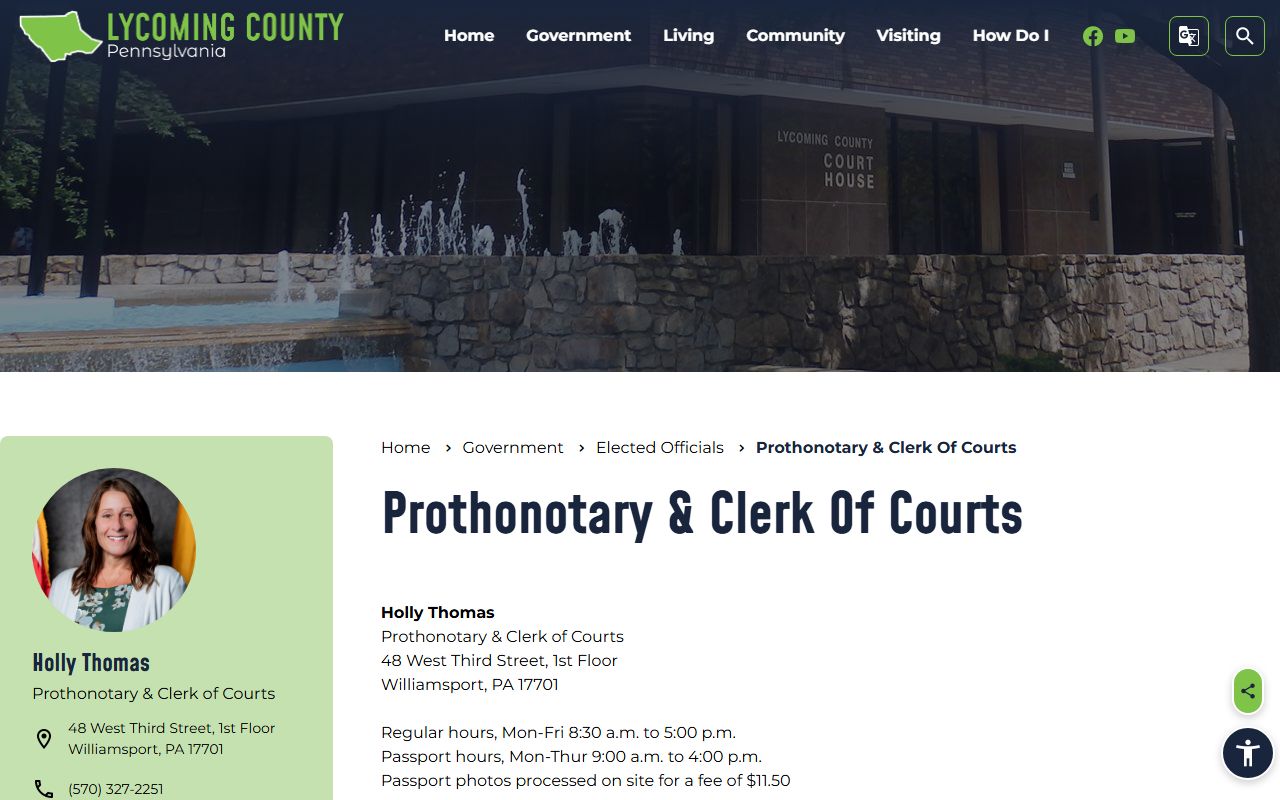
For criminal charges after a jail arrest, the criminal office and UJS docket route are more relevant than the local civil case portal.
Charges Filed After Arrest
Formal charges are not always identical to the words used at booking. Police may begin a case by complaint, the magisterial district process may narrow or hold charges for court, and the District Attorney may later file, amend, negotiate, or dismiss charges in Common Pleas. District Attorney Thomas A. Marino's office prosecutes Lycoming County criminal cases from 48 West Third Street in Williamsport.
| Document | Who Uses It | What It Does |
|---|---|---|
| Complaint | Police or prosecutor in the early case | Starts the lower-court criminal case and states the alleged offenses. |
| Information | District Attorney after charges move forward | Lists the charges the prosecutor files in Common Pleas. |
| Indictment | Grand jury path when applicable | Charges a person through a grand jury process rather than ordinary complaint alone. |
Charge Status After Arrest
Charge status can change as court records after a jail arrest mature. A docket may show a charge held for court, amended, dismissed, withdrawn, replaced by information, resolved by guilty plea, sent to ARD, or disposed by trial. Warrant portal entries in Lycoming County also show status notes such as guilty plea, dismissed, held for court, proceed to court, ARD revoked, or replacement by information, which reinforces why a jail booking label should not be treated as the final court outcome.
| Status | Plain Meaning |
|---|---|
| Held for court | The lower-court stage found enough basis for charges to move toward Common Pleas. |
| Amended or replaced by information | The filed charge list changed after the first complaint or preliminary stage. |
| Dismissed or withdrawn | The charge is not proceeding as filed, though other charges may remain. |
| Guilty plea | The defendant admitted guilt to a charge or negotiated offense. |
| ARD revoked | A diversionary track was revoked, and the case may resume ordinary prosecution. |
Bail Records After Arrest
Bail can appear in Magisterial District Court or Common Pleas docket records. Pennsylvania release types include monetary bail, unsecured bail, release on recognizance, nonmonetary conditions, and no-bail or hold status. PAePay Bail Online is an official AOPC payment portal, but the captured county dropdown did not visibly list Lycoming County. Confirm availability with the court or prison before relying on electronic bail payment for a Lycoming case.
The PAePay bail portal explains card payment options, a 2.75 percent non-refundable service fee, and a $20,000 maximum electronic bail payment per credit-card transaction.
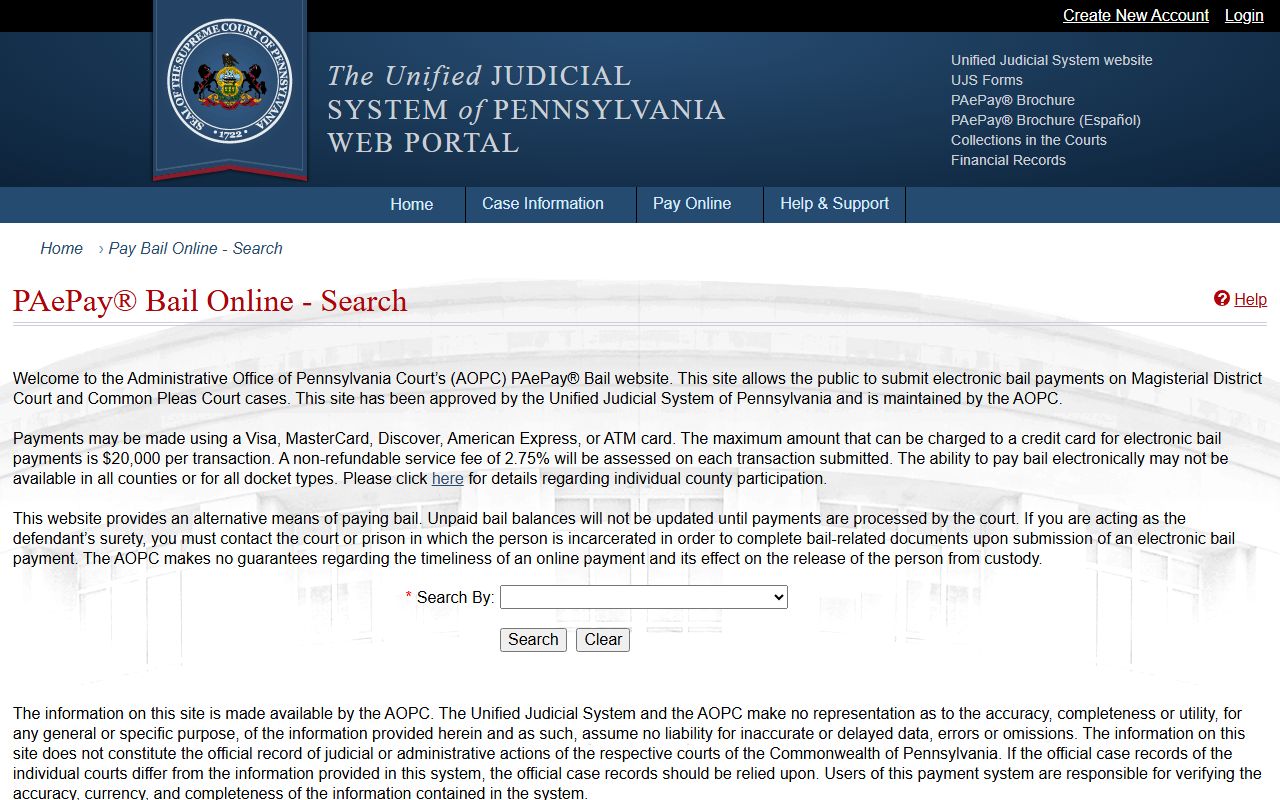
A hold from probation, parole, another county, federal authorities, ICE, or DOC can block release even when bail on one case has been paid.
Warrants Before Jail Arrest
The Lycoming County Sheriff's Warrants Division links to the public CountySuite Warrant Portal. Sheriff Eric Spiegel's page warns the public not to attempt to apprehend any fugitive and says law enforcement personnel must verify active warrants through Lycoming County Communications Center. Tips can go to the Sheriff's Office, Communications Center, anonymous tip sheet, or the mobile app tip route described by the sheriff page.
| Warrant Portal Field | What It Shows |
|---|---|
| Name | Listed person, usually in last-name-first format. |
| Age | Age or N/A. |
| Last Known Address | City, state, ZIP, or N/A when not shown. |
| Offense | Charge description, statute-style code, and status note when present. |
| Classification | Examples include Adult Probation, Preliminary Hearing, District Attorney, Domestics, Criminal, and Supervised Bail. |
Charges Versus Convictions
A charge is an accusation filed in court after an arrest. A conviction is the result of a guilty plea, verdict, or qualifying adjudication. Lycoming County court records after an arrest may show both, but they are not the same thing. A dismissed charge, withdrawn count, amended offense, or pending case should not be described as a conviction.
| Point | Charge | Conviction |
|---|---|---|
| Stage | Accusation or filed count | Final guilt outcome by plea or verdict |
| Can change? | Yes, through amendment, dismissal, or replacement | Only through later court action, appeal, or post-conviction relief |
| Where to verify? | UJS docket, complaint, information, Clerk of Courts | Disposition and sentencing entries on the docket |
Sealed Expunged Arrest Records
Pennsylvania expungement is governed mainly by 18 Pa.C.S. Section 9122 and related court rules. Sealing or expungement depends on the disposition, age of the record, case type, and court order. A clean docket result in one system does not prove that every agency copy, booking record, or non-government copy disappeared.
| Record Treatment | Effect | Practical Step |
|---|---|---|
| Sealed | Hidden from ordinary public access but not necessarily erased. | Review the docket and court order for who may still access it. |
| Expunged | Official records are removed or treated according to the expungement order. | Use the Clerk of Courts or legal counsel to confirm the order's scope. |
| Dismissed but not cleared | The docket may still show the case unless a separate clearing process applies. | Check eligibility under Pennsylvania law before assuming removal. |
Limits on Court Records After Arrest
Court records can lag, and docket sheets do not replace official criminal-history checks. Juvenile matters, sealed records, expunged records, protected victim information, investigative records, and private identifiers may be restricted. The Pennsylvania Right-to-Know Law governs many local agency records, but court records are governed through judicial access rules and court offices. Use the originating office for verification when the docket affects a court date, release, employment, housing, or legal deadline.
Important: This information is not a consumer report and must not be used for FCRA-covered screening decisions.
Public Record Search
Sponsored Results